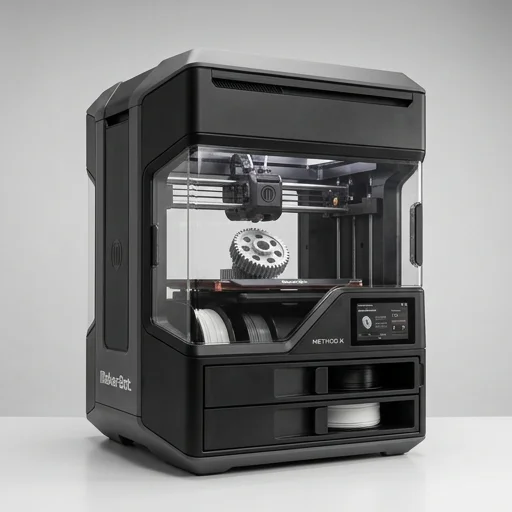
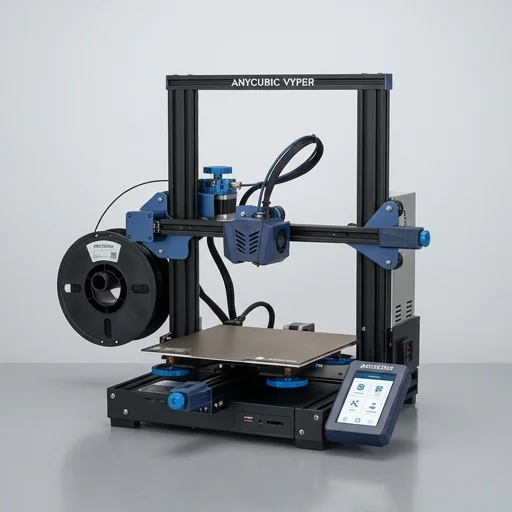
The MakerBot Method X occupies a distinct position in the FDM landscape, bridging the gap between desktop convenience and industrial-grade reliability. Built around a rigid, all-metal frame and a fully enclosed, heated build chamber that reaches up to 100 degrees Celsius, the Method X is engineered to print engineering-grade thermoplastics like ABS, ASA, and even carbon fiber-reinforced nylon with the dimensional accuracy and layer consistency that professional engineers and product designers demand. Its dual extrusion system supports both a model material and a soluble support material, most notably MakerBot's dissolvable SR-30 support, allowing complex geometries, overhangs, and internal channels to be printed without the labor-intensive post-processing typically required with breakaway supports.
On the bench
At the core of the Method X's design philosophy is thermal control. The heated chamber minimizes warping and layer delamination, two of the most persistent headaches when printing engineering plastics like ABS on open-frame machines, while a circulating heated chamber ensures uniform temperature distribution across the entire build volume rather than just at the print bed. The machine also incorporates a water-cooled extruder and a specially designed print head intended to handle high-temperature filaments without clogging or thermal creep, giving users the confidence to run demanding materials in production settings without babysitting the print job from start to finish. Bed leveling is automated and precise, reducing setup time and operator error, which matters considerably when the printer is being used for functional prototypes or short-run manufacturing rather than casual hobbyist projects.
Living with it
Positioned squarely at engineering teams, product designers, and manufacturing departments rather than home users, the Method X emphasizes repeatability and dimensional accuracy over sheer print speed or ease of entry. Connectivity options include Wi-Fi, Ethernet, and USB, along with cloud-based monitoring through MakerBot's software ecosystem, enabling remote job queuing and print tracking across multiple units on a shop floor. Its build volume, though modest compared to some industrial FFF systems, is calibrated to balance part size with the thermal and mechanical stability needed for tight tolerances. Overall, the Method X represents MakerBot's push toward serious functional prototyping and low-volume production, delivering a machine that trades some of the plug-and-play simplicity of consumer 3D printers for the material versatility, thermal performance, and precision that industrial applications require.