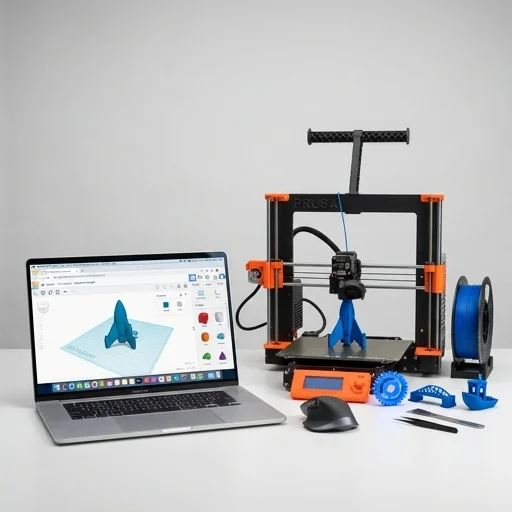
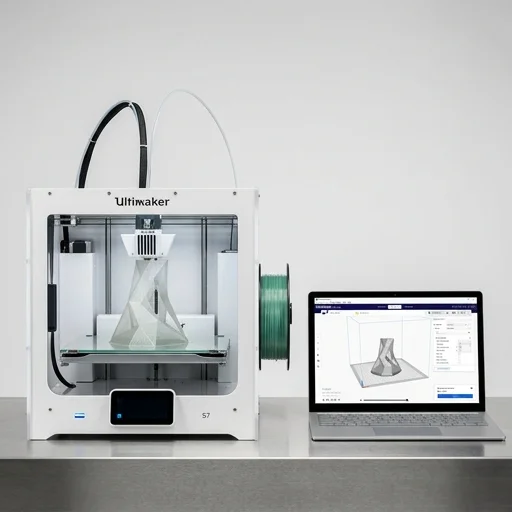
Autodesk Tinkercad is a free, browser-based CAD platform that has become one of the most accessible entry points into 3D design for makers, educators, and hobbyists working within the 3D printing space. Unlike heavyweight professional CAD suites, Tinkercad strips away complexity by using a simple block-based modeling approach, where users combine, subtract, and manipulate basic geometric shapes to build more complex objects. This makes it especially popular in classrooms and maker spaces, where students and beginners can quickly grasp the fundamentals of 3D modeling without needing to learn intricate toolpaths or dense menus. Because it runs entirely in a web browser, there's no software installation required, and projects are automatically saved to the cloud, making it easy to pick up work across different devices.
On the bench
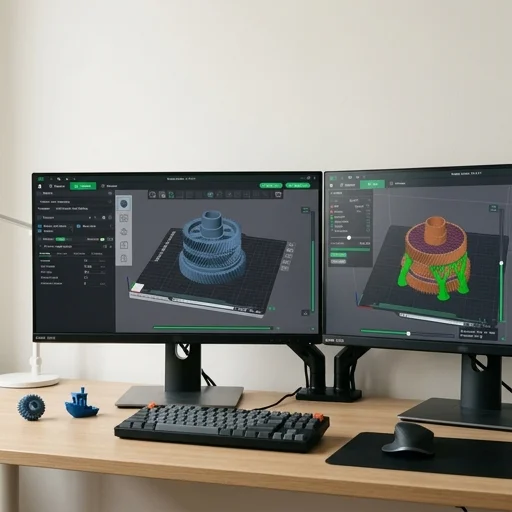
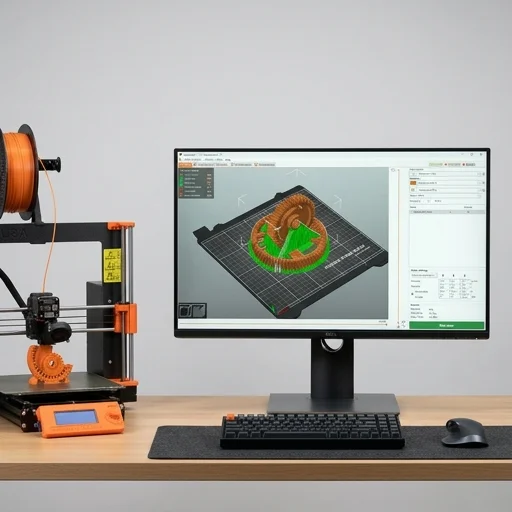
For the 3D printing community specifically, Tinkercad offers a direct and frictionless pipeline from idea to physical object. Once a design is complete, users can export it directly in STL or OBJ format, the standard file types recognized by virtually every desktop 3D printer and slicing program. The platform also includes built-in alignment, grouping, and measurement tools that help ensure models meet dimensional accuracy before they ever reach the print bed, reducing failed prints caused by sizing errors or non-manifold geometry. Many hobbyist printers, including those using Creality, Prusa, and Ender machines, rely on Tinkercad as their go-to tool for creating custom brackets, enclosures, cosplay props, and personalized gifts, precisely because the software removes the steep learning curve typically associated with parametric CAD tools.
Living with it
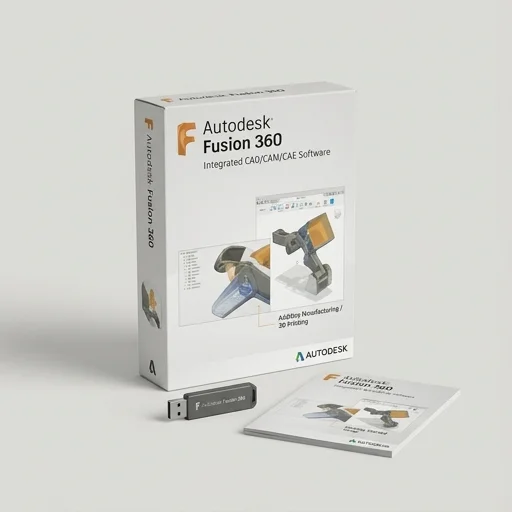
Beyond basic shape manipulation, Tinkercad has expanded to include codeblock-based scripting for generative designs, as well as integration with Autodesk's broader ecosystem, allowing more advanced users to eventually transition into tools like Fusion 360 when their projects demand greater precision or complex assemblies. Its community gallery also lets users browse, remix, and download thousands of pre-made models shared by other creators, giving 3D printing enthusiasts a vast, ready-to-print library to draw inspiration from or use outright. Because it's free and requires no powerful hardware to run, Tinkercad has effectively lowered the barrier to entry for 3D printing design work, empowering everyone from grade-school students to weekend tinkerers to bring their ideas into physical, printable form.